LASER ENGRAVING · BREDA · NETHERLANDS & BELGIUM
QR code and barcode engraving
A small mark. Useful information.
Link a product, part or label to a number, document or web page. We assess the code together with the material, available space and the scanner you intend to use.
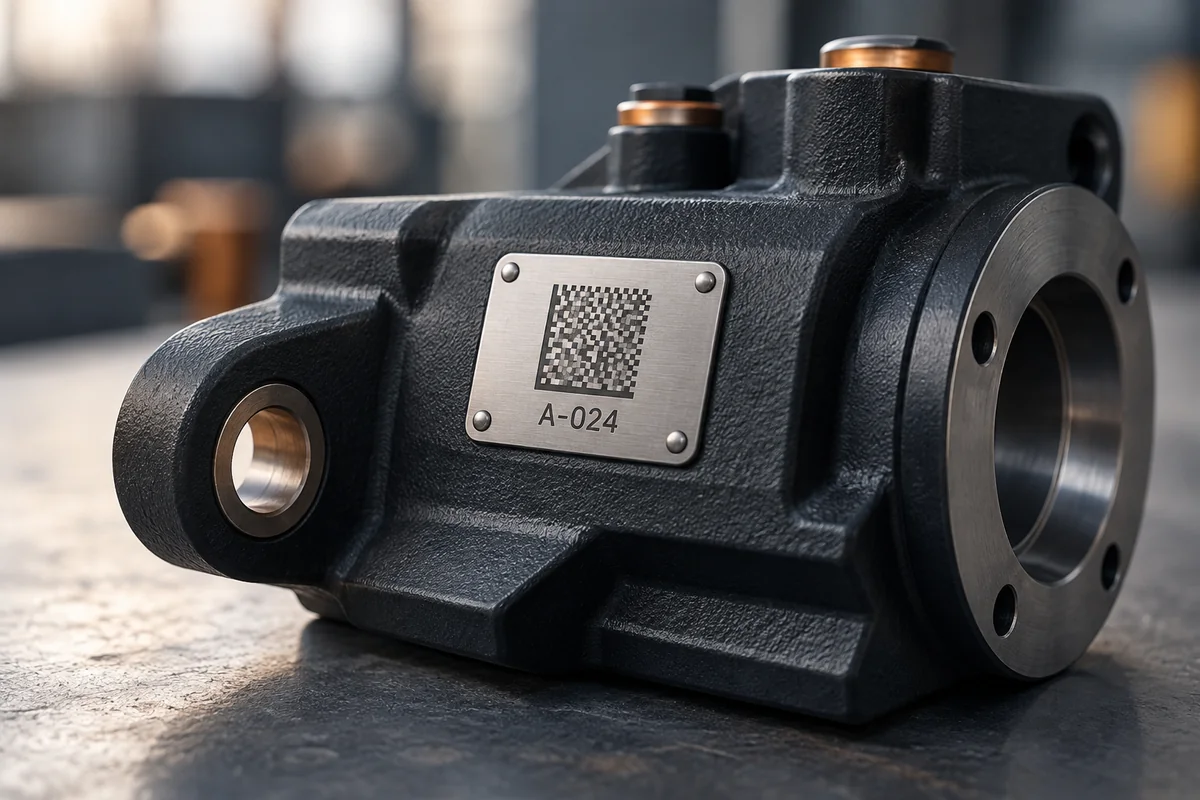
Illustrative example. We agree the material, details and specification for your product.
Careful choices make the difference
Engraved QR codes: design for the scanner
An engraved QR code or barcode needs to be usable. A crisp-looking image does not guarantee that your intended scanner will read it reliably. Contrast, size, clear space around the code and a flat position matter as much as the encoded content.
Decide beforehand whether the code links to a web page or contains a fixed identifier. A long URL may produce a more detailed QR pattern; a short, stable destination on your own domain may be more practical. For a batch, supply the data for each item in a checked list. SDLG assesses whether the marking can be produced on your product. The intended scanning device and conditions are part of that assessment.
Options
A code needs to work in practice.
An engraved code can link to a manual or identify a part in your records. The design starts with its content and use. Which data is needed, who will scan it and with what device? Together with contrast and size, these determine whether the application is practical.
Information with a product
A QR code can link to a web page or manual. Choose a destination you control and keep essential information available without the code.
Distinguishing parts
A barcode or Data Matrix can contain an individual identifier. Choose a code type that suits your existing process and tell us your system requirements.
Plates with several details
Combine a code with readable text or a serial number on identification plates. For batches with different content on each item, see batch engraving.
Choices & specification
Content, surface and checks.
01
The right code type
QR codes, barcodes and Data Matrix are different formats. Tell us which type your scanner or records system expects and supply the exact content.
02
Space and contrast
Allow space for the code and its clear border. Keep text, logos and mounting holes outside that border. Shine, curvature and low contrast can make scanning harder. Supply the dimensions of the entire available marking area.
03
Test as you will scan
Assess a suitable sample with the device and conditions of the final use. A scan with one phone does not establish performance with a different scanner or mounting position.
We agree a practical scan check. A formal verification report or a particular code grade is not included as standard. Specify these requirements beforehand so we can explain what can be provided within the project.
Preparing your enquiry
This helps us get started.
- Required code type and the exact text, URL or identification data.
- One fixed code or a checked list of unique values.
- Material, finish and a photograph of the marking area.
- Available space and intended scanning device.
- Quantity, operating conditions and any verification requirements.
After initial contact, send an example code and its exact content as text or a data file. Preserve leading zeros and check the link between every product and its code. Check that a URL opens the correct page. For a batch, our guide to batch engraving and data listscan help. A screenshot alone is not a reliable data source.
From idea to proposal
What affects the price?
The number of unique codes, data preparation, material, positioning and agreed checks affect the proposal. A sample may be needed for a new combination before the batch is produced.
SDLG works from Breda and delivers products throughout the Netherlands and Belgium. Visits, drop-offs and collection at Heusing 10K are by appointment only. Tell us your preference when enquiring; we agree the schedule, packaging and shipping costs. See our contact details and directions to our workshop.
Your first idea is enough to start a conversation.
Can you make a scannable code on every material?
No. The material, surface, contrast, detail size and scanner need to suit one another. We assess your product and agree a trial if the combination has not been established.
Can each code in a batch be different?
We can include this in your enquiry. Supply one checked list containing the encoded content for each product and, if needed, a separate readable number. Use an identifiable product reference to keep the code, part and text together. Tell us whether duplicate values are intentional or must be avoided.
Can the destination change later?
The encoded content cannot change after engraving. If you use a web link you control, you can manage the content behind that link. SDLG does not automatically provide an online management service.
Is a successful scan the same as certified verification?
No. A practical scan check shows whether the code can be read under those test conditions. Formal verification against a specified standard requires a separate agreement and assessment.
How small can an engraved QR code be?
There is no universal minimum for every product and scanner. The amount of data, code type, surface and scanning device determine the space required. Supply the available width and height, including the clear border. A trial on the selected material may be needed; we agree this beforehand.
Can my logo be inside or beside the QR code?
A logo inside the pattern changes the code and may interfere with scanning. A separate logo beside the code gives more freedom, provided the clear border is preserved. For a standard QR code, that border is at least four code modules wide. Other code types have their own requirements; we assess the final combination for your use.
About the process
Which laser suits your product?
The material, surface and required result determine the process. Read our guide to CO₂ and fibre lasers →
From idea to finished product
What will your code need to do?
Describe the code content, who will scan it and with which device. Include the material, available space, quantity and whether each code is unique. Specify unusual scanning or verification requirements beforehand so we can agree the process and any trial.
- Your enquiry goes directly to SDLG in Breda.
- An initial idea is enough to get started.
- You can email files after initial contact.
Prefer to discuss your idea directly?
+31 6 51 50 21 11 · info@sdlg.nl