Techniques and applications
Preparing laser cutting: material, artwork and dimensions
Specify cutting outlines, engraving and dimensions before production. A practical artwork guide with our CampPlus identification plates as a real example.
Laser cutting and engraving are different operations
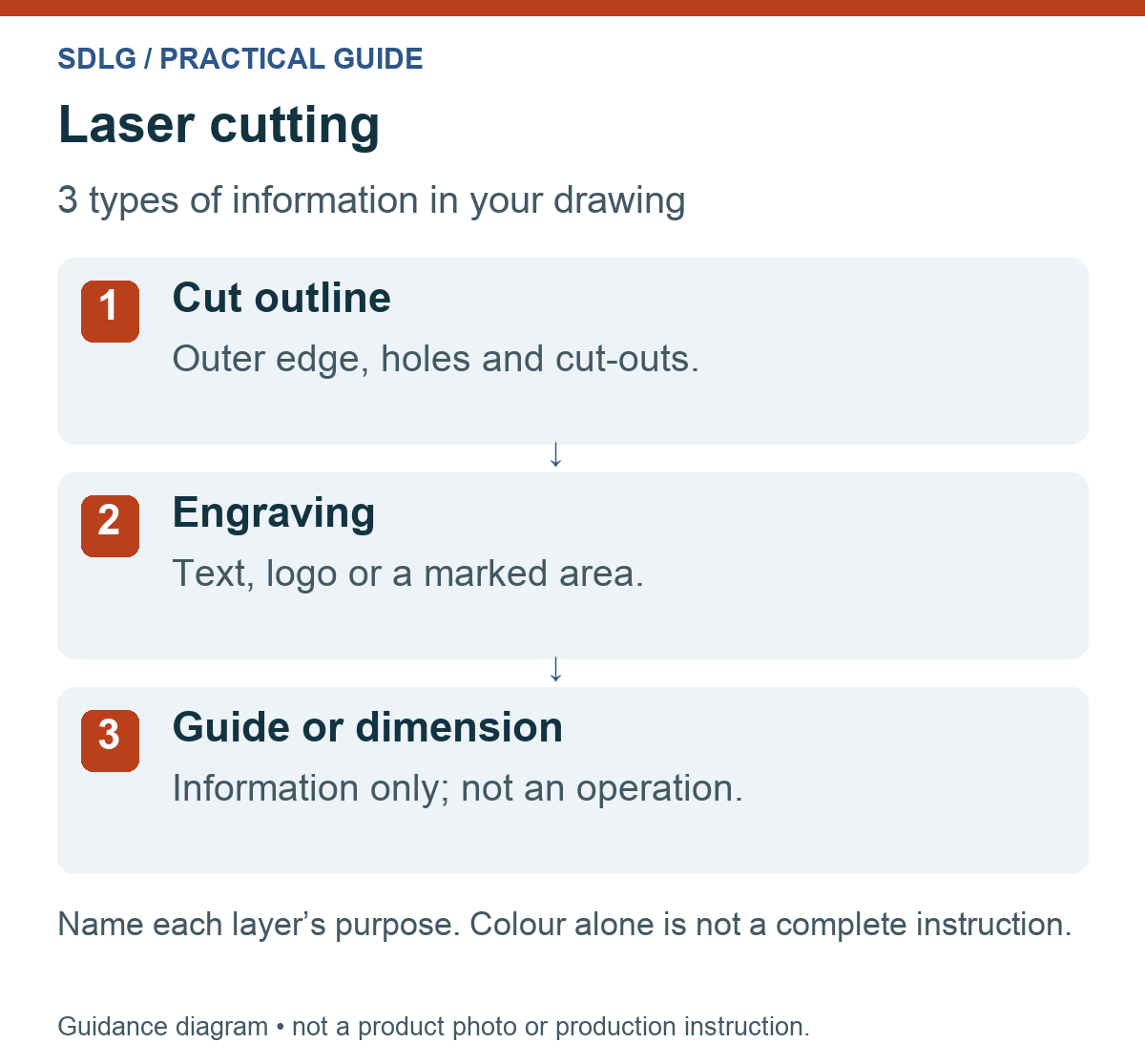
Laser cutting removes an outline from suitable sheet material. Engraving places wording or an image on the surface. A product can combine both. Do not send only a logo: explain which lines form the outer shape or holes and which areas should be engraved.
Which material information is needed?
Specify the exact material, thickness and any finish. “Plastic” or “wood” is too general. For supplied material, a product specification or link helps. An unknown composition cannot be assessed by appearance alone. SDLG confirms material suitability and execution for your project.
Explore laser cutting services and the material pages for acrylic or wood.
Laser cutting: 3 layers with a clear legend
- Supply vector artwork where available, such as SVG, AI or a suitable PDF. A PDF can contain only a photograph; its extension does not prove that cuttable outlines are present.
- Specify final dimensions in millimetres and include at least one check dimension.
- Separate cutting outlines, engraving areas and information lines. Include a short explanation or reference image.
- Avoid unintended duplicate lines and check that contours are closed.
- Specify quantities, fixing holes, important distances and any fit requirements.
If you only have a picture or sketch, send it with the dimensions you need. Any artwork preparation and costs are agreed beforehand; a file is production-ready only after checking.
Our own work: cutting and engraving one plate
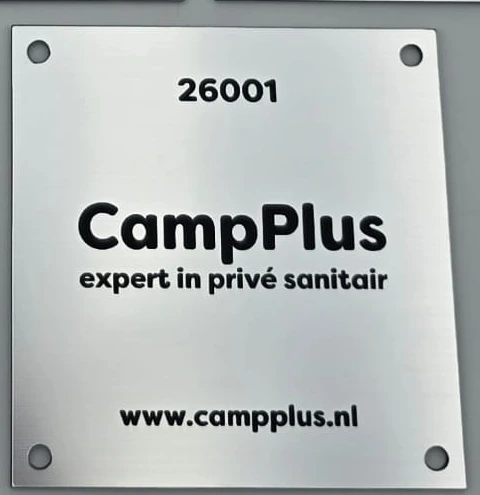
SDLG made 111 Rowmark plastic plates for CampPlus with a logo and sequential numbering. Alongside the engraving, the outer shape and four fixing holes were cut. The case shows why fixed layout, variable data and mounting points need separate specification.
Discuss work area and fit in advance
SDLG’s larger laser has a 910 × 610 mm work area. That does not guarantee that every product of that size is feasible: material, thickness, fixturing and shape also matter. The 120 × 120 mm work area belongs to the separate fibre laser and is not the general cutting format.
For interlocking parts, material thickness and fit matter. Cutting removes material. Have required clearance or a critical fit assessed in advance and discuss whether a trial part is needed. This guide does not state a universal tolerance or maximum cutting thickness.
CampPlus: the information needed alongside the logo
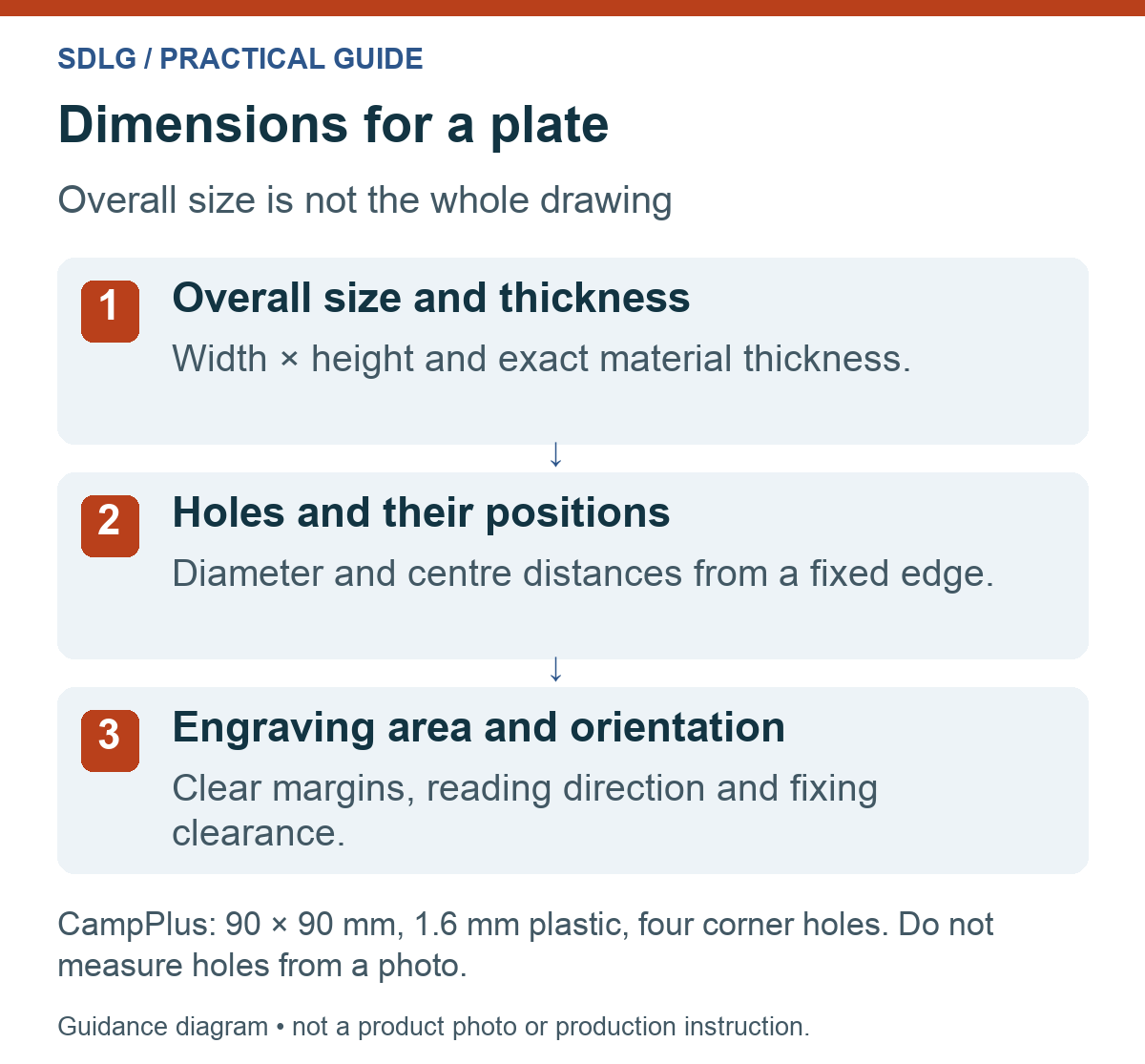
The 111 CampPlus plates measured 90 × 90 mm and used 1.6 mm Rowmark plastic. SDLG engraved the logo and sequential numbers and cut the outline and four corner holes. These dimensions describe this project, not a standard product. A comparable plate also needs hole diameters, centre distances and reading direction. A logo or product photograph often lacks that information. Dimension important holes rather than estimating them from a photograph.
Frequently asked questions about laser cutting
Can I supply a PDF for laser cutting?
Yes, for assessment. A PDF may contain vector paths, a photograph or both. Identify the cutting lines and include a check dimension. Its file extension alone does not establish whether the cutting outlines are usable.
What should I supply for a part that must fit?
Describe its mating part, which dimensions are critical and how you measure them. Include the matching part’s drawing if available. SDLG agrees assessment and any trial before the batch is cut.
What if engraving and cutting lines are mixed?
Make each operation clear, for example through named layers and a short explanation. A visible line may be a cutting path, engraving line or guide. Colour alone without a key does not fully specify the job.
Is 910 × 610 mm the maximum sheet size for every job?
It is the larger laser’s working area. Material, thickness, shape and fixturing still matter. For laser cutting a larger or assembled design, discuss the separate parts and how they must fit together first.
Can a trial part be assessed before a larger batch?
Discuss this in your enquiry, especially for a close fit or unfamiliar material combination. Define what needs checking and which version will become the reference. Execution, any costs and scheduling are agreed beforehand.
Enquire about laser cutting: what should you send?
Include material and thickness, final dimensions, quantities, file, engraving, fixing details, preferred date and delivery country. SDLG assesses execution from Breda. Scheduling is confirmed after stock and execution checks; shipping transit time is separate.
Discuss your laser cutting project or read which laser process suits your product.