
Techniques and applications
Product identification for businesses: codes and plates
Identify products with correct data, readable codes and materials suited to their surroundings. Prepare one clear list before production.
Product identification starts with its purpose
Product identification should distinguish the right product, component or object. It needs correct data, readable layout and material suited to the environment. SDLG discusses information and specification together before producing a batch.
Decide what someone needs to do with the marking
Should a technician read a serial number, a colleague locate a cabinet or a scanner recognise a code? This determines the information needed. An internal object code may be sufficient when other details are held elsewhere.
For identification plates, fixed business details can be combined with variable numbers. For control panels button positions, cut-outs and labels matter too. Supply dimensions and layout together.
A code must remain readable in actual use
Barcodes and QR codes require sufficient space and contrast. Leave clear space around the code; simply reducing the image can reduce readability. Curved or shiny surfaces also affect how a scanner sees it.
Describe reader and conditions. Check the intended code and marking in that situation. A QR destination must also remain available. SDLG can apply a code but does not automatically manage the information system behind it. Explore QR code and barcode engraving.
Use one clear data list
Prefer one file with a column per field and one row per product. Preserve leading zeros, punctuation and spelling exactly. Distinguish fixed from variable fields. Check the final list before agreeing production.
- A unique number per item, without unintended duplicates.
- A consistent product or location reference.
- Exact text or code for the item.
- A clear connection between variants and quantities.
Preparation for repeat work and variable data is explained under batch engraving.
Material and fixings belong together
Legibility has little value if a plate is in the wrong position or comes loose. Specify surface, fixing method and conditions. Cleaning, moisture, outdoor use and wear can determine the specification.
Stainless steel, finished aluminium and suitable laser engraving laminate differ. A brand or colour name alone does not establish laser or use suitability. Read the considerations in our guide to industrial identification plate materials. For specific requirements, we discuss a trial or further assessment.
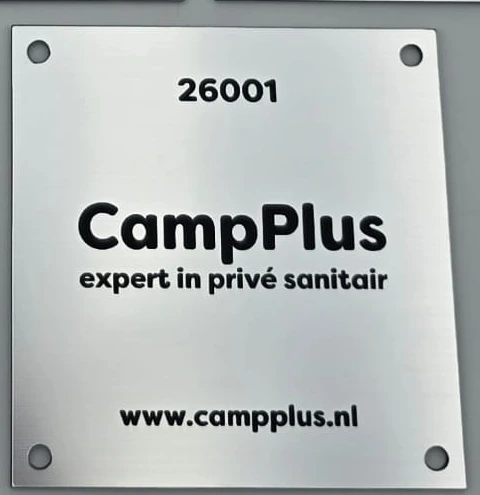
A readable number on an actual identification plate
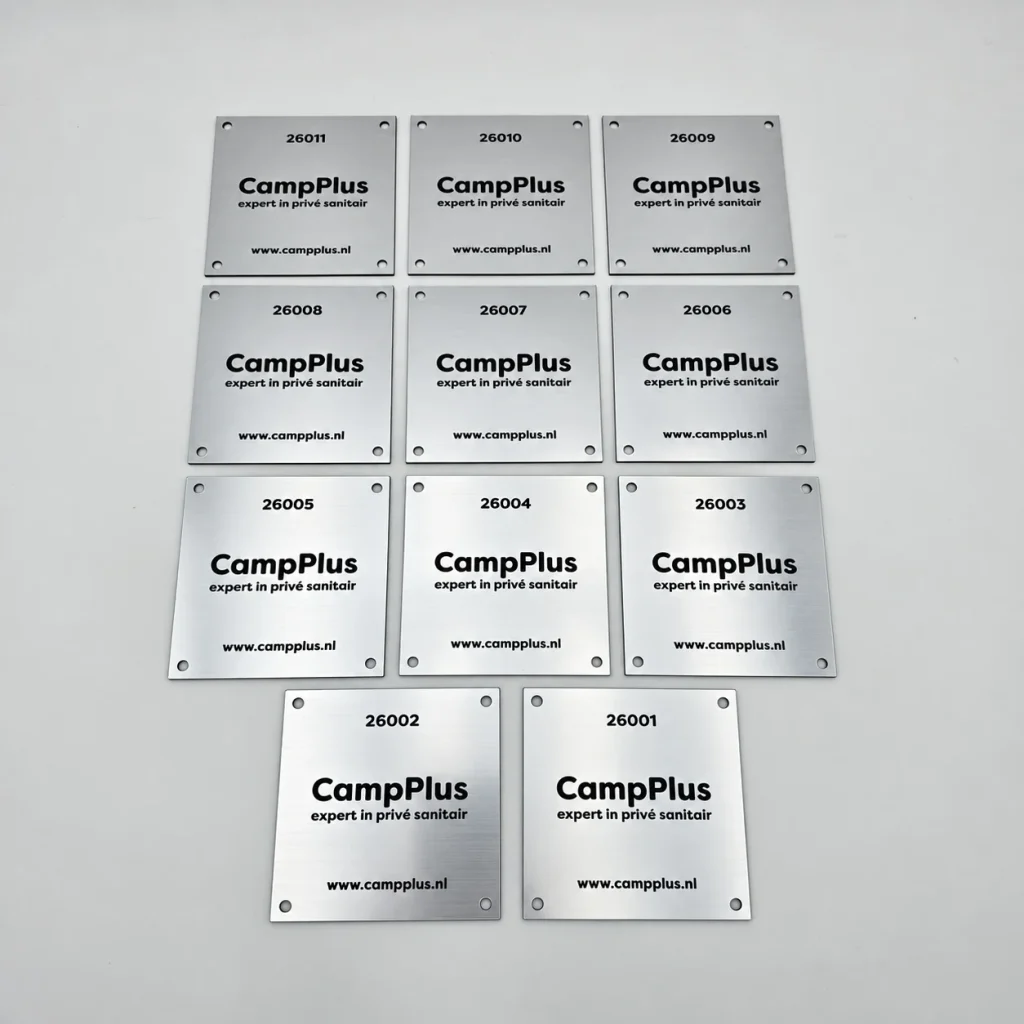
The CampPlus detail shows plate 26001 with a logo and website address. No QR code was used here. It demonstrates placing a human-readable number in a layout; scanning any proposed code needs its own checks on the chosen material.
What number 26001 does and does not tell you
The CampPlus plate carries a number, fixed company logo and website address. The number identifies the item; it does not automatically state who maintains it or where the unit is currently located. Your own register can link changing information to that number. This product identification approach keeps a stable key visible without permanently engraving every business detail. The photograph shows a readable number, not a tested QR code or software integration.
Frequently asked questions about product identification
Must product identification plates contain every product detail?
Not necessarily. Decide what must be directly readable and what can remain in your own system. A stable unique code may suffice if staff can use it to find the correct record. Agree that workflow internally.
What should I check besides whether a QR code scans?
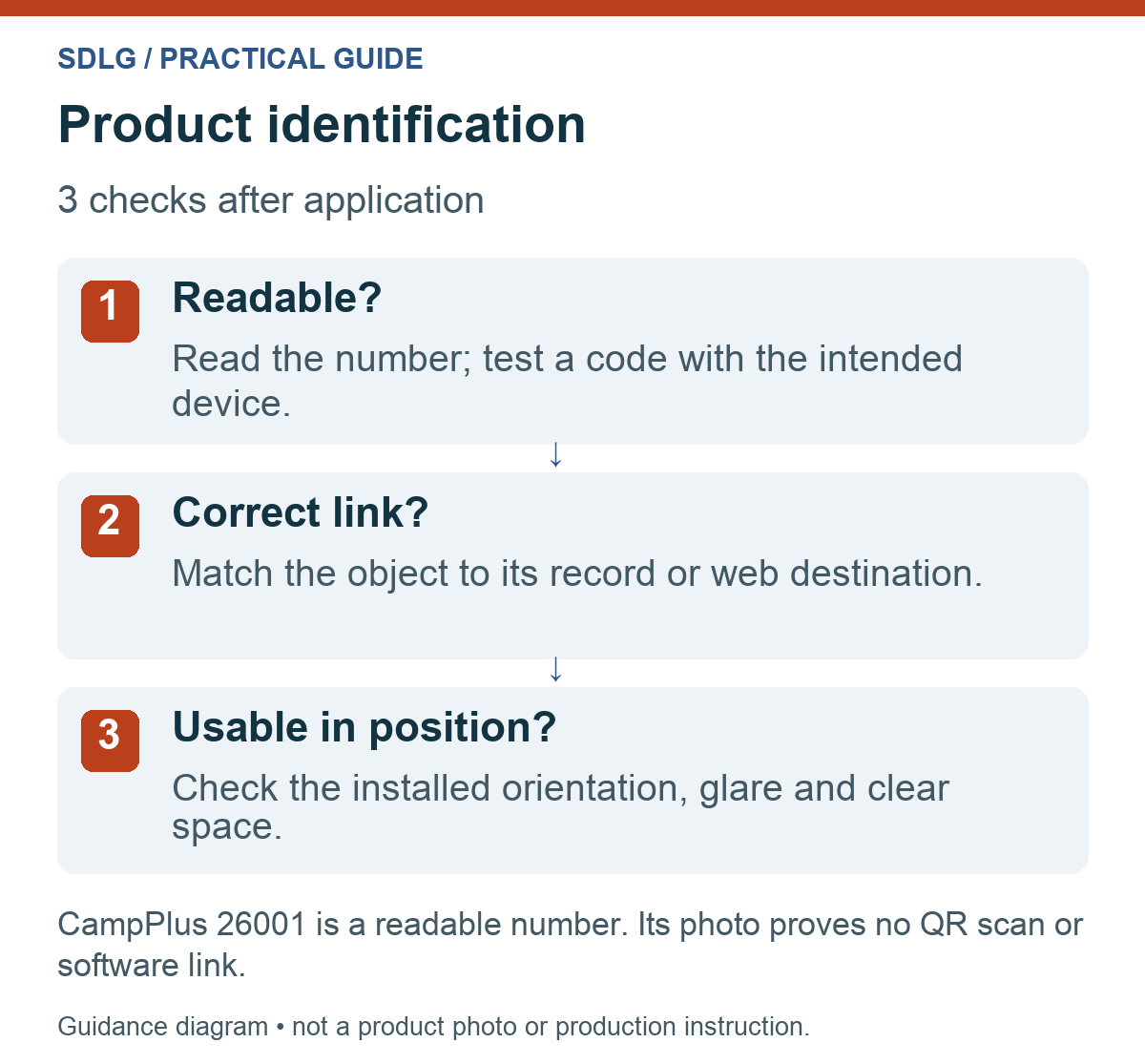
Check that it leads to the correct item or page, not merely that a scanner recognises it. Test with the intended device in the installed working position. Consider a human-readable code as a fallback.
Does a web address in an engraved code need long-term planning?
An engraving does not change when your website changes. Choose the destination and its owner deliberately. SDLG applies the agreed code; that does not automatically include managing pages, redirects or records.
Can a code look large enough in a photograph yet be unusable?
Yes. A photograph does not reproduce actual scanning conditions. Size, encoded content, surface, reflection and clear space affect assessment. Supply the intended code and final dimensions; an enlarged screen image is not a practical test.
How do I add identification plates later without duplicate numbers?
Assign one owner to the number sequence and supply a checked addition. Identify existing ranges and exceptions. Verify each final number-to-object relationship in your own records before production.
Enquire about product identification with the right data
Tell us what needs identifying, who reads the information and which data changes per item. We advise on format, material and an organised submission method.
SDLG is Snake Designs Nederland, based at Heusing 10K in Breda. Visits and collection are by appointment only. Products can be shipped throughout the Netherlands and Belgium.
Production and delivery
Lead time: 1–5 working days, subject to stock availability. For larger projects, we agree the lead time individually. The schedule is confirmed after checking stock and the proposed work. Shipping transit time is separate. Delivery and shipping guidance.