
Techniques and applications
When is DTG unsuitable for your clothing?
Fabric, artwork and use determine whether DTG is appropriate. Learn what needs assessment and how to prepare your clothing enquiry.
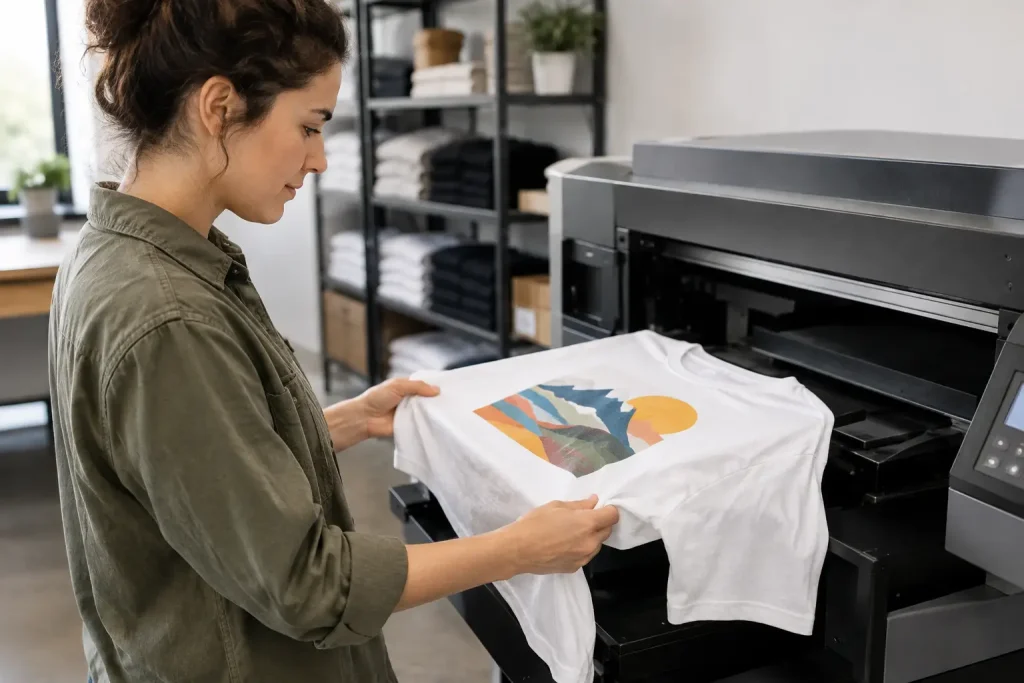
When is DTG unsuitable?
DTG prints a design directly onto textile. Suitability depends on the specific garment, printing system, artwork and use. A fibre composition or attractive product image cannot confirm the result. SDLG assesses your clothing enquiry and discusses suitable personalisation; this guide does not confirm that every garment can be decorated with DTG.
The fabric and printing process must work together
A high cotton content may be a useful starting point, but does not automatically make a garment suitable. Texture, colour, finish and pre-treatment also matter. Polyester is not ruled out in every case: some DTG systems support it with an appropriate process. That capability belongs to the complete system and is not a general guarantee for every polyester garment.
Situations needing further assessment
| Situation | What needs assessment? | Practical step |
|---|---|---|
| Polyester or technical fabric | Garment, system and pre-treatment compatibility | Send the product code and fibre composition |
| Stretch or strongly textured fabric | Distortion and visibility of detail | Assess the actual garment |
| Dark fabric with large areas of colour | Coverage and feel of the decorated area | Compare a physical example |
| Very small lettering or narrow gaps | Readability at final size | Send the artwork and intended width |
Compare the intended result, not only the process
Embroidery adds thread texture; DTF transfers a printed design onto the fabric. Each needs detail, placement and comfort assessed. A compact chest logo is a different brief from a large back image.
Read our embroidery and DTF comparison and what to check in a clothing sample. If you want a particular result, describe that result and its application rather than choosing a process without assessing the garment.
Prepare your clothing enquiry
- Garment model, colour and fibre composition.
- Logo or image, intended dimensions and placement.
- Quantities by size and any individual names.
- Use, care requirements and preferred date.
From Breda, SDLG coordinates garment selection and personalisation. Feasibility and scheduling are assessed beforehand.
Explore SDLG workwear services or discuss your clothing order.