Techniques and applications
CO₂ or fibre laser: which suits your product?
Compare CO₂ and fibre by material, operation and work area, with our CampPlus and de Leermeesters projects and practical rotary guidance.
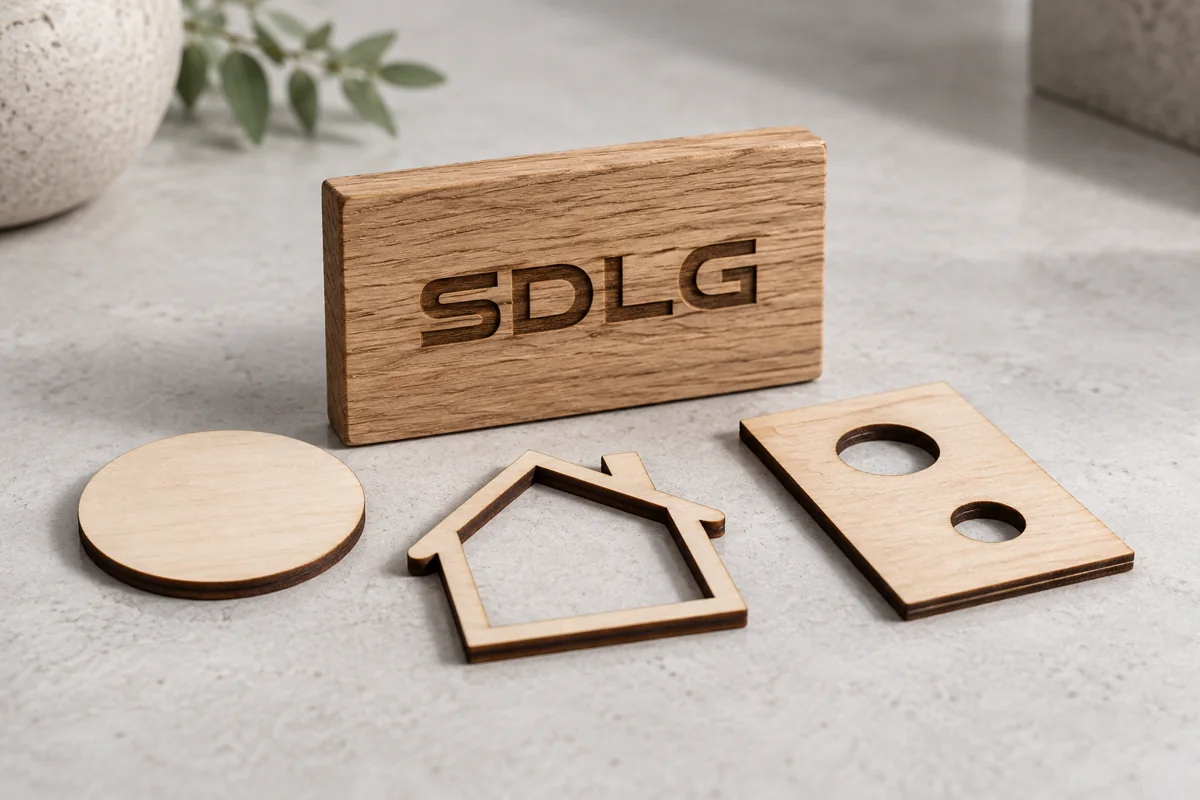
CO₂ or fibre laser: start with the material
Choosing a CO₂ or fibre laser starts with your product. A name on glass, a metal mark and a cut-out shape are different briefs. Specify material, coating, dimensions and intended operation; you need not select machine settings yourself.
SDLG’s two lasers
| Machine | Work area | What needs assessment? |
|---|---|---|
| CO₂ hybrid laser | 910 × 610 mm | Engraving and cutting suitable materials; composition and thickness assessed first |
| Separate fibre laser | 120 × 120 mm | Marking suitable smaller products; alloy, coating and required mark assessed first |
The work area is not automatically the maximum product size. Height, shape, fixturing and access to the surface also matter. The GCC Hybrid combines two CO₂ sources. The term metal tube describes a laser source and does not mean every metal object can be directly engraved with it.
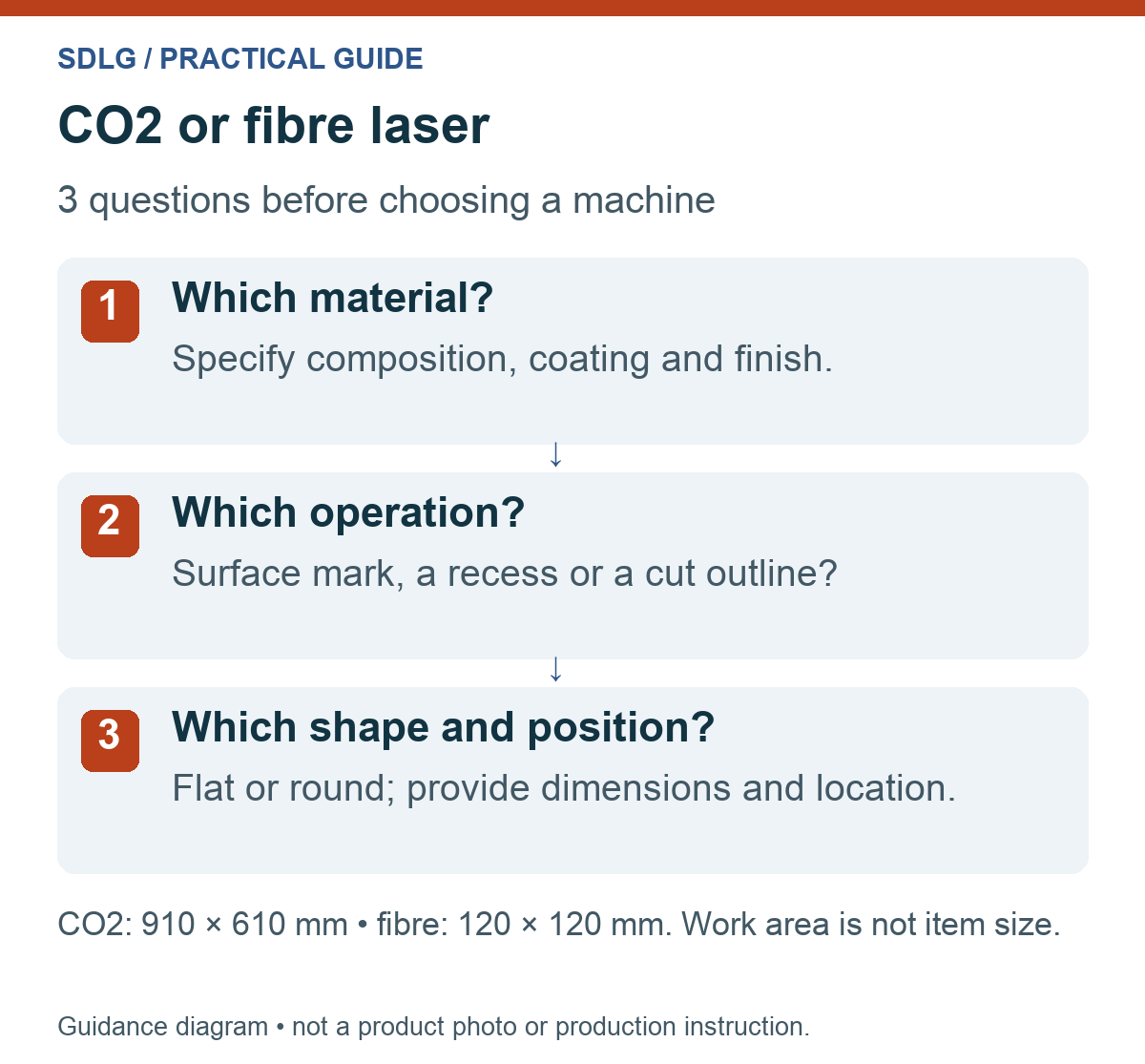
Choose from the material
- Wood: species, grain and finish affect the result. Explore wood engraving.
- Glass: type, shape and placement determine feasibility. Explore glass engraving.
- Metal: specify alloy, surface finish and any coating. A surface mark differs from an engraving with physical depth. Read about stainless steel engraving.
- Sheet material: specify exact material, thickness and required outline. Explore laser cutting.
From the workshop: appearance is not material
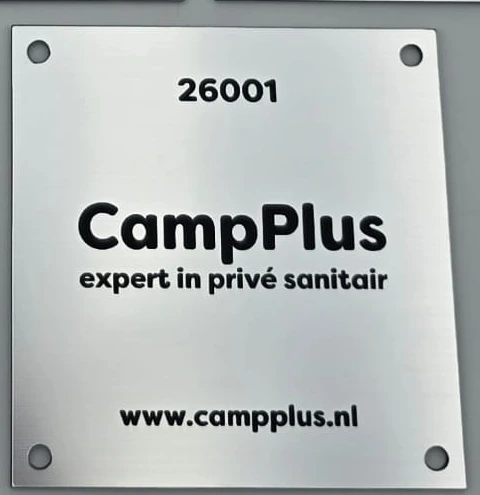
For CampPlus we made 111 numbered plates from Rowmark plastic with a brushed aluminium appearance. They were engraved and cut, with four fixing holes. A metallic appearance therefore does not establish that a plate is stainless steel or aluminium.
Cylindrical products: rotary up to 130 mm
For suitable cylindrical products we use a rotary attachment, up to a maximum product diameter of 130 mm. A handle, taper or delicate finish can limit placement. Send a photograph, product dimensions and the intended engraving size.
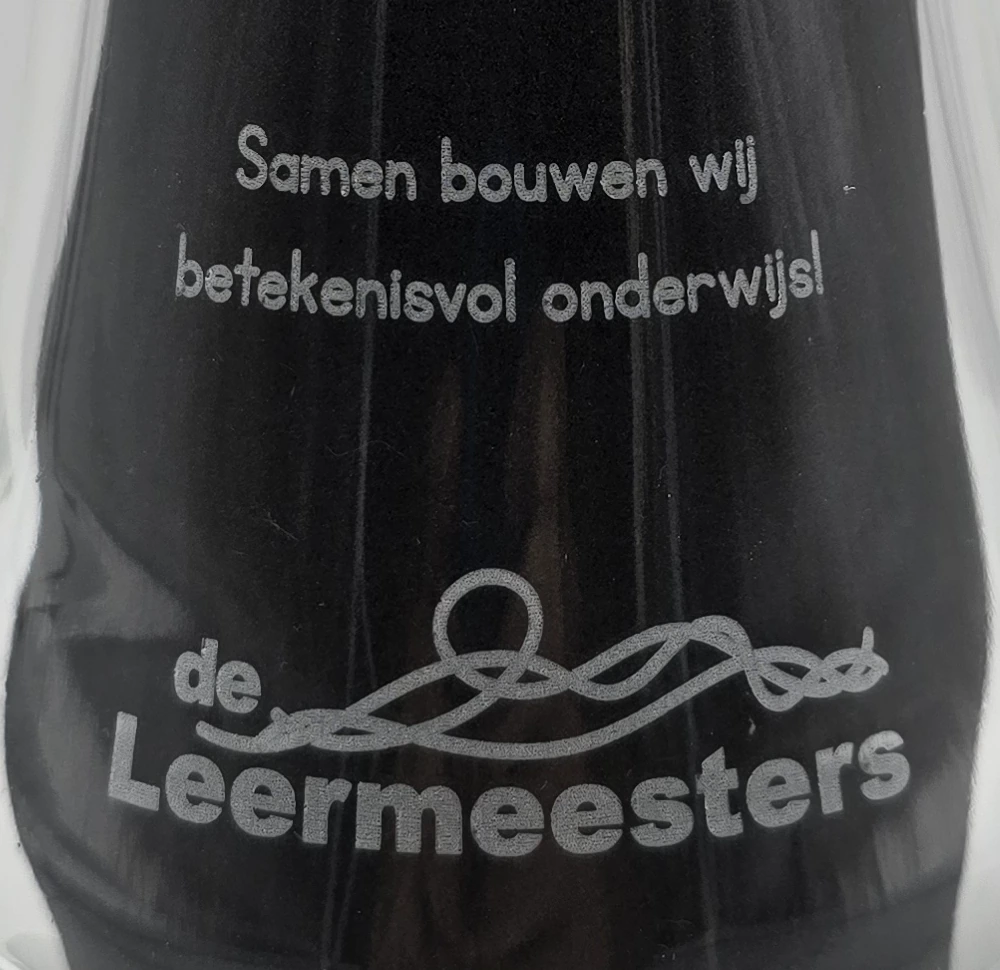
What the water jugs teach us about laser selection
For de Leermeesters’ four jugs, a coloured logo had to remain recognisable without colour differences. SDLG adapted the linework and used a rotary for the jug shown. This makes the CO₂ or fibre laser decision practical: assess glass type, shape and intended image before choosing the machine. A larger logo file alone does not automatically make artwork suitable for glass engraving. Explain which detail must remain recognisable.
Frequently asked questions about CO₂ or fibre laser
Must I choose a CO₂ or fibre laser myself?
No. Describe the product and desired effect. A photograph with material details, dimensions and coating information helps SDLG assess the process. State whether you want a surface mark, tactile engraving or a cut-out shape.
Will every 120 × 120 mm product fit the fibre laser?
No. This is the fibre laser’s working area, not a guaranteed product size. Height, protruding parts and fixturing can restrict access. Supply both overall product dimensions and the required engraving area.
How does a round bottle differ from a flat plate?
A bottle needs its diameter, curvature and rotary positioning assessed. A flat plate needs material, thickness and fixturing considered. A logo of the same width does not automatically require the same preparation.
Can a coloured logo be engraved on glass?
Its colours are not reproduced as printing inks. For de Leermeesters, linework was adapted so wording and artwork remained recognisable without colour differences. Explain whether the full symbol, name or message takes priority.
Does one material sample cover a mixed product order?
Not automatically. The yellow bottle and fleece in the FM Technical Services case needed different treatment. Agree assessment for each material and product variant; one sample does not establish the result for every item.
Read this case study: FM Technical Services: 22 engraved business gifts
CO₂ or fibre laser: have your product assessed
- Product, material and any coating.
- Dimensions, position and intended size of the operation.
- Quantity and any variable names or numbers.
- Intended result: marking, engraving or cutting.
- Preferred date and delivery country.
About this guide
Prepared by SDLG using confirmed machine work areas, our own customer projects and previously consulted technical information. General guidance does not replace assessment of your product.
Read also: preparing material and artwork for laser cutting →